Case study
Rewordly
An AI-powered Chrome extension that helps users rewrite text, correct grammar, adjust tone, and improve clarity directly inside the browser.
Overview
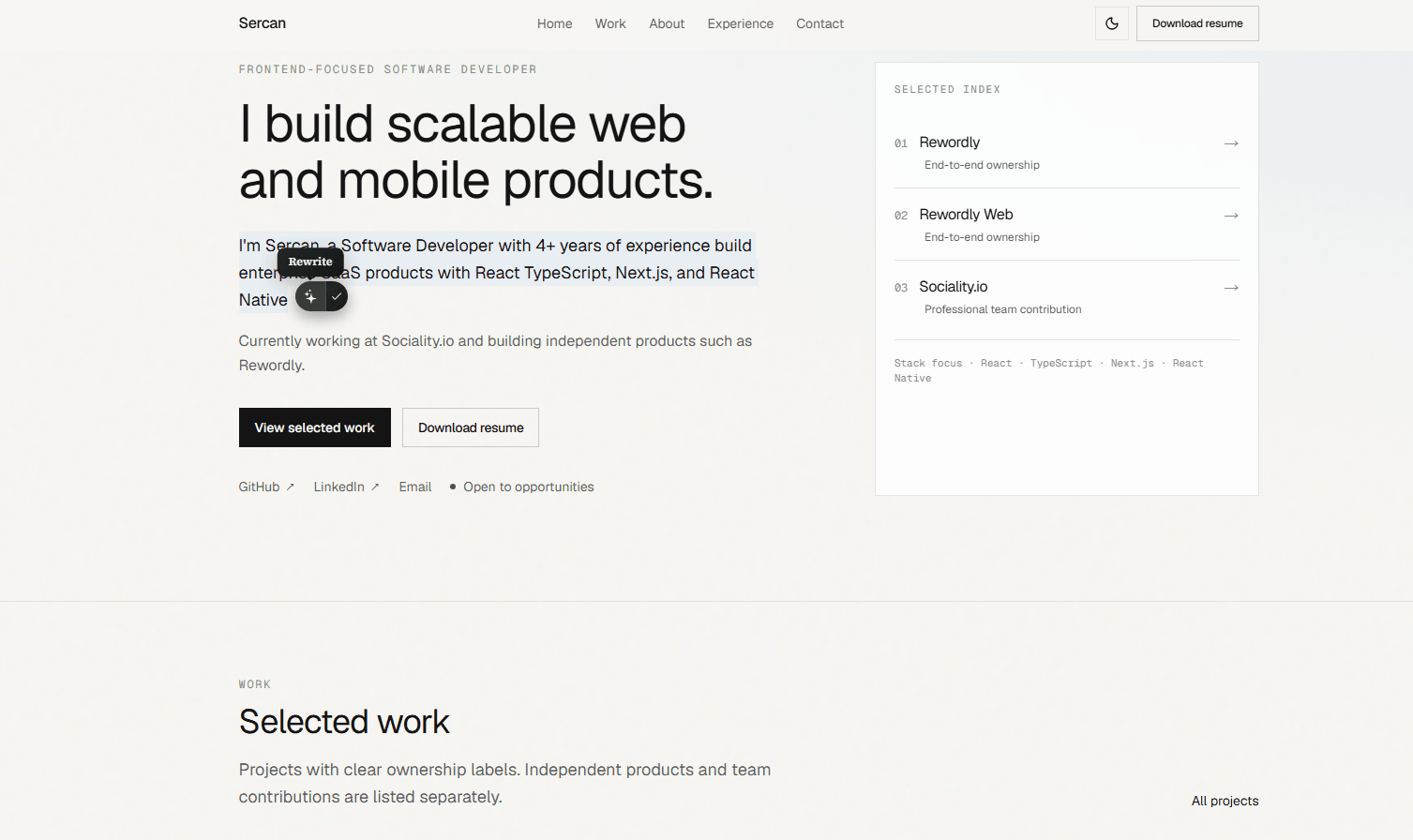
Rewordly is an independent Chrome extension that improves writing in place: rewrite, grammar correction, tone control, and clarity improvements without leaving the current page.
Context
I built Rewordly as an independent product to explore browser-extension UX, selection-based AI workflows, and freemium product mechanics end to end.
My role
I own product direction, architecture, implementation, releases, and iteration as creator and developer.
Ownership
End-to-end ownership of the extension: UX, TypeScript architecture, Chrome APIs, auth/session handling against the Rewordly web platform, and Pro monetization flows.
Problem
Writing tools that pull users into a separate app interrupt flow. People already write inside email clients, docs, CMS fields, and chat boxes that behave differently across the web.
Contribution
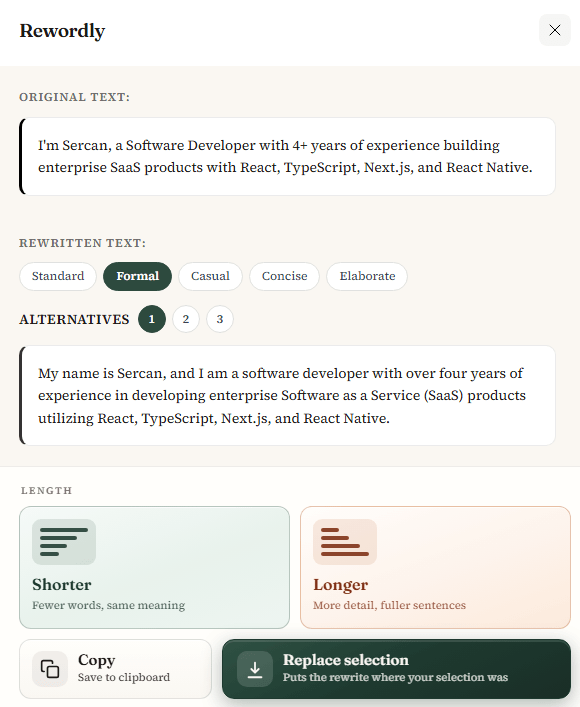
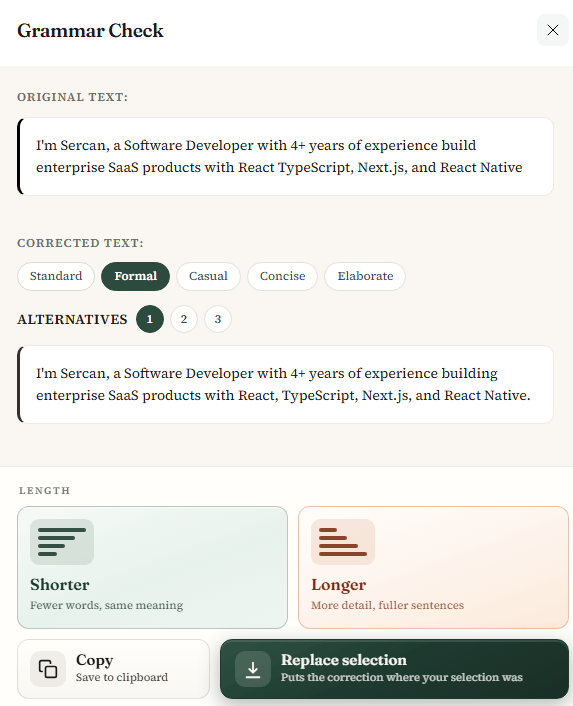
- Designed and shipped selection-based rewrite and grammar flows with a floating control and modal review/copy/apply path.
- Handled inputs, textareas, and contenteditable surfaces so the extension works across arbitrary host pages.
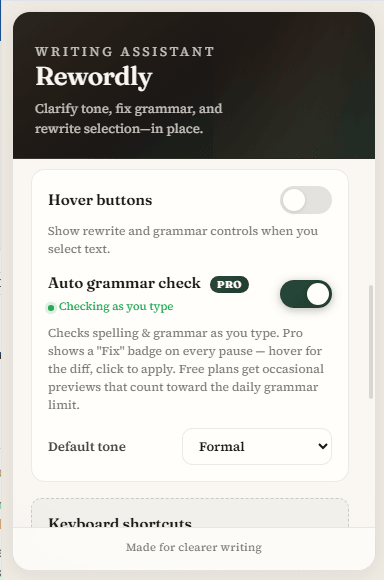
- Shipped popup settings, per-site toggles, context-menu actions, and keyboard shortcuts.
- Integrated account session, usage limits, and Pro upgrade experiences with the Rewordly web backend.
- Added proactive grammar checking for Pro users and rewrite alternatives.
Technical decisions
- TypeScript + Webpack bundling for content, background, and popup entry points.
- Isolated injected UI styling to reduce host-page CSS collisions.
- Backend API on rewordly.store instead of embedding API keys in the extension.
- Chrome storage for preferences and install/update state only.
Challenges
- Reliable text selection and apply behavior across heterogeneous websites.
- Working safely with contenteditable editors.
- Injecting UI without breaking host-page styles or layout.
- Extension-to-web authentication and session refresh.
- Designing free limits and paid-plan feedback without blocking core usability.
Outcome
- A shipping independent product with rewrite, grammar, tone, shortcuts, auth, and subscription paths.
- A reusable case study of selection-based browser UX and extension–web product integration.
Visuals
Technologies
- TypeScript
- Chrome Extension APIs
- Webpack
- Supabase
- OpenAI
- HTML
- CSS